Sunday, 21 February 2016

Cooking up a storm


The finished dish - ready for serving with a green salad.

Today I'd like to share one of my favourite pasta meals. Honeycomb cannelloni. This is a Jamie Oliver recipe from the 'Cook with Jamie' book. It's simple to make and although it does have a small amount of anchovies in, they can be left out to create a delicious vegetarian dish. This one is great for sharing. The recipe can be found here.

Beginning to assemble the dish - sauce, spinach and ragu.


Adding the canneloni - then top with remaining ragu and creamy sauce.


Sunday, 14 February 2016

Fabric Manipulation - creative ideas with fabric.


I'd like to share with you some ideas for manipulating fabric. I have been fortunate to be involved in South East Northumberland Creative Futures project over the last 7 months or so. Yesterday was our last workshop, led by Claudia Van lieshout Smit. Non of the techniques we experimented with yesterday were completely new to me, but the combination of techniques was. I'd like to show you some of the experiments and explain how they were created. Some of these technquies could be developed into garment construction, art textiles or even fine art pieces and there are several ideas that I know I will develop further to meet my artistic intentions. * image heavy post*

All of the following techniques can be done at home with the minimum of equipment.

Materials needed:
Sewing machine and thread.
Iron
Baking paper/ parchment
Bondaweb
Heat gun
Acrylic paint
Organza - synthetic
Cotton fabrics
Offcuts of thread and fabric

Key Processes:
layering
cutting
ripping
stitching
bonding
melting


The first and simplest techniques was to make a fabric sandwich. Choose a plain background fabric and over half of it place fabric offcuts/ threads. you can be as deliberate or as randome as you wish.
Fold the fabric in half to enclose the bits and stitch around the edge. You then stitch across your fabric sandwich. I tried stitching a grid and some curved lines, but you could do some freestyle machine embroidery if you wish.


Then taking a sharp pair of scissors or stitch ripper, cut into the top layer - making sure not to cut the fabric below. The edges can be left raw; washed to make them fray or folded and stitched down.


I think I'll further embellish my designs with paint and some beading.


The second technique creates a "new" fabric that can be used in other techniques or embellished.
Start with a base fabric. I used some fine silk, but a medium cotton would have been better. Remove the paper backing from some Bondaweb and dot it over the fabric, ensuring the edges have good coverage. Then again layer off cuts of thread and fabric. you could be quite random here or create a very distinct pattern/ design. Over the top add another layer of bondaweb, this can be torn into small pieces. Make sure you remove the backing paper. Top with a layer of synthetic organza. Place beetween two sheets of baking parchment and iron without steam on a medium heat. The fabric should bond together creating something new that still has some flexibility.


You can also paint bondaweb. Use a water based paint, acrylic is perfect. It should be watered down. Once dry the bondaweb can be applied to a light coloured piece of fabric and the backing removed. This can then be stitched into or other fabrics added on top. just remeber to use Baking paper to stop it sticking to your iron.


The final technique we used was again a layering activity. Similar to the first one. Start with a plain backing, add scraps of fabric/ thread and cover with a layer of synthetic organza. Other synthetic fabrics could work too. Stitch all the layers together. This is a great opportunity to try some machine embroidery. Once stitched, gently apply heat using a heat gun. A hair dryer is not hot enough, and a wall paper stripper too strong. Craft heat tools are quite inexpensive and provide the right amount of heat. As the heat reacts with the synthetic fibres they contract and start to melt away, revealing the layer below.


I also tried just heating some organza, applying the heat carefully allowed me to control the distortion and create a textural piece of fabric.


I enjoyed this process and created several samples. One I particularly liked was sandwiching organza betweek two layers of cotton, which I slahed open and then heated to allow the organza to melt away, leaving a lacy delicate surface. More development needed I think. The white fabric looks a bit too stark, black might have been better.


Look out for more experiments!
What are your favourite techniques with fabric.


Sunday, 7 February 2016

Developing your creativity


In this current age, creativity is prized as a key skill. Employers want employees to have it and be able to use it. However in the educational landscape of the UK at the moment the subjects that develop creativity and being sidelined and seen as less important. Schools are dropping performing and visual arts at a horrific rate.
 
Q: So what is creativity? 
A:      1) The ability to form new ideas and solutions to problems.
           2) To make original work.
Many people just don’t believe that they are creative. All are creative, but we may be creative in different ways. Some are creative in thought and some in making. Creativity, if it is going to flourish should be fostered and developed. There are ways we can boost our creativity and there are barriers to its development.
As an artist, I have faced many barriers to developing my creativity and I still don’t always get it right but I’m getting there. Let me share some of the things I need to watch out for and some of the things I find helpful in boosting my creative development.

1.     Self Doubt – This is the killer of creativity. That little voice that says you are just not good enough. I used to believe this, and then I decided to create things anyway, whether they were good or bad, what I found was that as I became more confident my work became better.
2.     Opinions of Others – This is a tricky one. As Humans we value what other people think and in certain circumstances we need our work validated by others, but this should not be the driver to what we do. Create it anyway and if someone likes it – great. If not just create for yourself.
3.     Taught linear thinking – It’s very easy to get into a linear process when making. Just working towards the final outcome. I know that when I have a very specific idea about what I want the final outcome to be – I always struggle with creating it. Instead – enjoy the journey.
4.     Time – As I work full time, finding time to create is always a challenge. However, I try to use my creativity in everything I do. It makes my job more creative and enjoyable too.
5.     Opportunity – Sometimes we miss opportunities to be creative because we are looking for a particular solution to a problem, rather than looking for alternatives.
6.     Rules – Sometimes they are there to be broken!


1.     Plan time – I will set time aside to work on my designing and creating. It’s not as much as I’d like, but it’s a start, and it does mean at some times I say no to the myriad of other things that need my time. Even if it’s only 15 minutes a day!
2.     Collect, pinch, appropriate – become a magpie, collect things that inspire you, poems, images, items, photographs, keep them! Either physically or virtually. I love Pinterest to help with this.
3.     Explore and experiment – Break those rules. Try something new. A new technique, media. A new theme? Get some training, go on courses and apply what you learn to what you already know.
4.     Collaborate and ask questions – Work with others, learn from others, share with others, join a group, collaborate – all the time ask, “What would happen if…?”
5.     Shower Moments – Keep a notebook. We all have those light bulb moments, usually when in the shower, driving, drifting off to sleep. Keep something to hand to scribble or record your thoughts at those moments.
6.     Don’t be precious – don’t be afraid to push your ideas, take it further. It’s when we push it that new ideas develop and we get out of our comfort zone. This requires courage and resilience as it’s in this place that we allow ourselves to “fail”, for things to go wrong – this can force us to look for new or alternative solutions rather than the safe ones.
Write, think, draw, paint, make, decorate, act, sing, make music, design, engineer, teach, learn. How do you create?

Sunday, 31 January 2016

Asymmetric t shirt


I finished the t shirt that I posted about last week. It's the asymmetric long sleeve top from January 2014 Burda Style.
It was an easy make. I ran it up in about and hour and finished the neck edge and hems the following day. The hardest part about this make was fracking the pattern pieces from the sheet.

My sister took a quick photo of me wearing it. Sorry no construction shots! I made a straight size 38 with no alterations. I think it would look great as a dress, if you added about 15cm to the length, but it makes a great and comfy top. My mum and sister have already asked me to make them one.

Sunday, 24 January 2016

Works in Progress

I've started sewing a top and have traced a patttern fro a wrap dress.
I fancied making a long sleeve t shirt, but wanted something a little different so I chose this one from the January 2014 issue of Burda style.

I'm making in it a plain charcoal grey jersey. I love the long length and the over long sleeves. I just need to hem it and finish the neck binding.

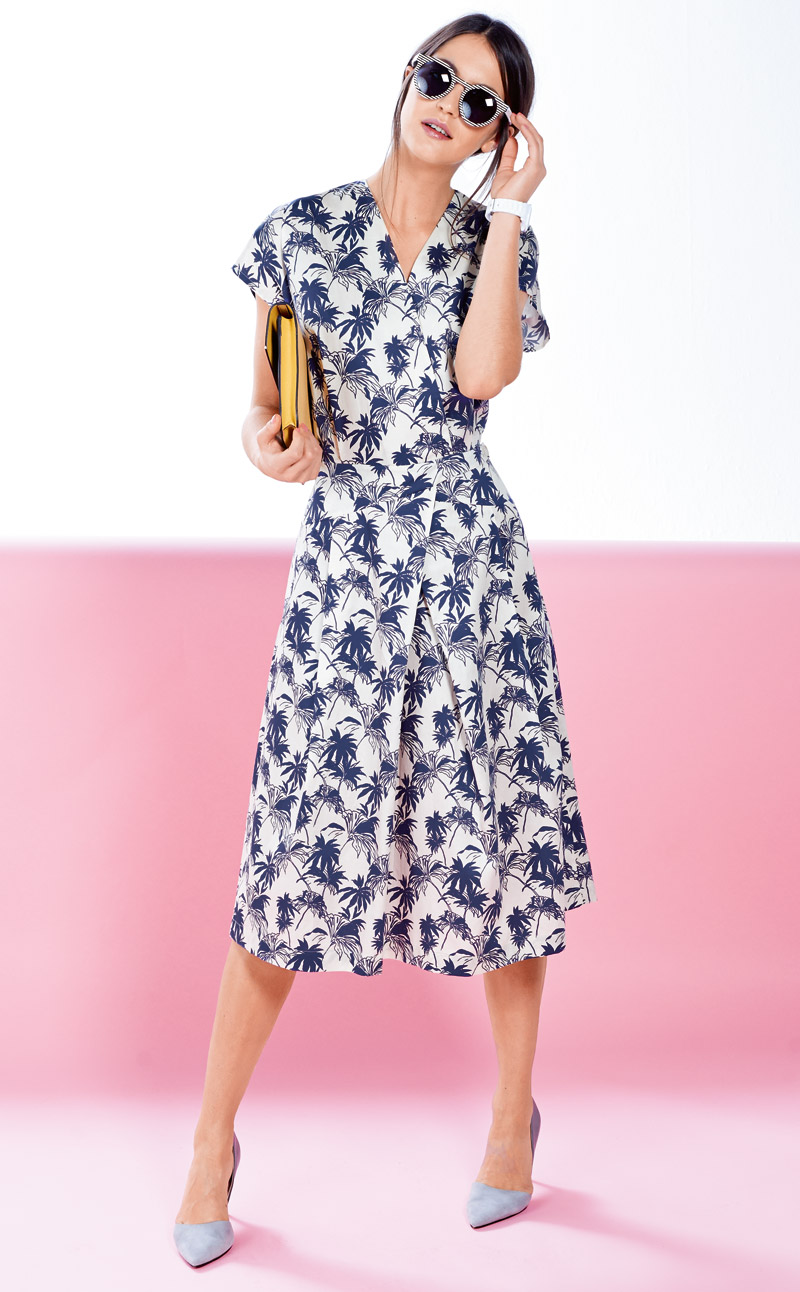
I've also been looking for a dress to make with the hand designed batik fabric that I finished last week. I chose this wrap dress, still a bit cool to wear something like this, but I love dresses and thought the design would look good in this style. It's from the march issue 2015 of Burdastyle.


I've just traced the pattern, size 36 as some folks on pattern review said it ran large, and after measuring the pieces , it does.
Can't wait to get it sewn up.

Sunday, 17 January 2016

Drawing with Stitch


I'm trying to re-engage with the textiles techniques I used to love so much, but marry them with the sewing and art that I make. I don't want each of my practices to be a separate entity, but part of the same creative process and hopefully produce some mixed media pieces over the coming months.


With this in mind I have been attending some textiles workshops and experimenting at home. I'm progressing with my Batik fabric. I added a second layer of wax over the top of the pale blue dye and dip dyed in a violet dye. However the colour was rather weak and the over-all effect wishy washy. Idecided at the last minute to use the machine dye that John had bought me at Christmas. I took the fabric out this morning and I'm really happy with the results. I had used a mix of beeswax and paraffin wax. these melt at different temperatures and this has had an effect on the way the dye has penetrated the fabric. The blue under colour is not really visible, but there is a distinct layered effect. some of the lower temperature wax has washed out, leaving just a little to be ironed out later. I'm hoping to turn this fabric into some sort of garment. Your suggestions for suitable patterns would be appreciated.


Yesterday I attended a machine embroidery workshop at Weave in Lynemouth and run by Donna Cheshire. You can see some of Donna's work over on her website. I haven't done machine embroidery for years and years and the last thing I wanted to do was cut out neat shapes and applique them to a nice fabric and satin stitch around the edge. I wanted to create pieces that reflect my drawing style and use the machine as a new way to draw.

Pelment Vilene, watercolour and machine embroidery

Donna brought along her Bernina, which is a simlilar model to mine, so it was useful to work out how the techniques would work on my machine. I now have a darning foot, so more experiments will be forthcoming.

Emulsion image transfer, watercolour, angelina fibres, net and machine embroidery

We worked with several methods. Painting and stitching onti pelmet vilene. This is very thick and an embroidery hoop is not needed to support the emboidery. this is a poritive in my eyes as I find emboidery hoops a bit strange to use.
We also worked into water soluble fabric. this is useful for adding lacy or detailed pieces to work.
My favourite was applique and stitch, I kept this very loose. rather than attaching the fabrics with bondaweb, I applied them and manipulated them as I went along. using a range of coloured thread to embellish my design. which was based on a painting I completed some time ago.

Cotton dyed fabric, applique, silk fibre paper and machine embroidery

I'm hoping to incorporate these techniques into some 3D designs in the near future.

Sunday, 10 January 2016

Batik experiments in progress

Batik "cap" carved wooden block

This weekend I have been experimenting with some batik techniques. I used to love dying fabric but haven't done any for years. My husband bought me some beeswax and a cap (carved wooden block used for printing the wax onto fabric) for christmas.  I tried using the block, however the cold british climate has meant the even inside the wax was cooling too quickly to apply evenly to the fabric. I might give it a go later in the year when its a bit warmer.

Experiments using a Tjanting

I still wanted to experiment and decided to use the Tjantings I had already to apply the wax. This works very well on a small scale and can easily be controlled, but I wanted to dye a large 3m piece of fabric. 

Dye bath and wax pot with Tjanting

I decided to use an old paintbrush to apply the wax in a random swirl pattern, drawn freehand.
I had experimented with the dye and used Dylon Bahama Blue. 

Design applied with paintbrush

On my samples it worked very well. I'm not sure it's working quite so well on my large piece. I did double up the amount of dye used, but I suspect that the fabric is not 100% cotton and has some polyester in it - despite checking at the shop when I bought it.

First sample - pre painted fabric, you can see the uneven stamping, then dyed blue

The fabric is currently steeping in the bath while I type, but will have to come out soon as the kids need their baths! I will be applying some more wax and over dyeing with purple dye. I'll see what that turns out like and may add a third layer of dye.

Fabric in dye bath

I need to invest in some Procion dyes. I used to use the a lot when I was a student, but haven't kept any for a few years. They are incredibly versatile and provide vibrant and strong colours.
Maybe a spot of tritik or shibori next.


LinkWithin

Related Posts Plugin for WordPress, Blogger...